
The Book
Afrofuturism and World Order
The Author(s)
Reynaldo Anderson
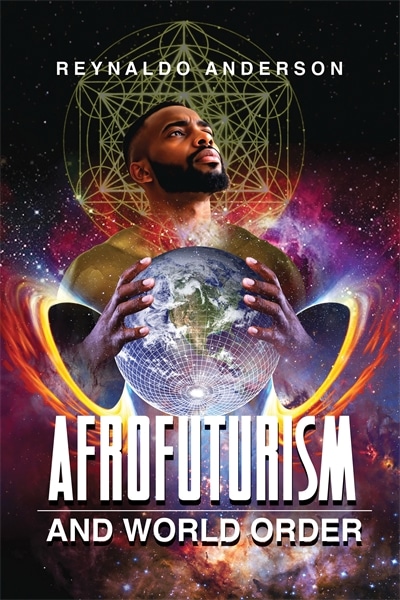
The speculative fiction subgenre of Afrofuturism has attracted considerable attention in recent years. While being well-known among African American Studies scholars and science fiction writers since the term was coined by Mark Dery in his landmark essay, “Black to the Future,” the term has increasingly become a catch-all term for the growing presence of Blackness within the realm of speculative fiction. Hit films such as Black Panther, the memory of Milestone Comics from the 1990s, and the growth of Black characters in mainstream science fiction, have given more people reason to know about and debate Afrofuturism. Reynaldo Anderson’s new book, Afrofuturism and World Order, however, reminds us that the idea of Afrofuturism is intricately tied to a critique of not just mainstream science fiction, but the larger Western-based world order.
Early on in his book, Anderson argues that Afrofuturism is the search for a “groundwork for a humanity that is not bound up with the ideals of white Enlightenment universalism, critical theory, science, or technology” (2). This tells the reader that Afrofuturism and World Order is the search for a theoretical framework—in both understanding speculative fiction and a larger understanding of changing socio-political dynamics—that grows beyond Western ideas of nationhood, freedom, and the future. For readers and scholars of intellectual history, therefore, Afrofuturism and World Order is a critical reappraisal of intellectual frameworks that many historians take for granted.
Indeed, Afrofuturism and World Order is, first and foremost, a critical read for African American intellectual historians, and broader scholars of the Black diasporic experience. Anderson seeks to tie Afrofuturism to a broader, older tradition of explicitly African thought and discourse. At the same time, his intervention coming during a time of debates about theoretical frameworks such as Afropessimism, is not a coincidence. In a age of uncertainty about the future of the West, growing debates about the strength of civil and human rights in the United States itself, and the continuing intractable problem of racism throughout the world, Afrofuturism and World Order serves as a key text in tying all these issues together—albeit through the study of speculative fiction and how that genre reflects an uncertain, but ever-changing, world.
The rest of Afrofuturism and World Order offers Anderson’s meditation on the long history of the rise of the “West” and the modern consequences of that rise. For example, chapter 2—“The Rising Tide of Color and Creating a New Race”—provides a fascinating history of the creation of modern ideas of race, and how that was concurrent with the founding of modern speculative fiction. Here, Anderson explores what he calls “the intersection of the esoteric or occult within science fiction, race, and geopolitics” (45). While individual aspects of this story will be familiar to some readers—the prevalence of pseudo-scientific ideas about race and white supremacy promulgated by Lothrop Stoddard and Oswald Spengler, for example—Anderson’s narrative does well to tie them to larger themes of geopolitical instability and the rise and fall of imperialism in the early to mid 20th century. One of the other standout themes of this chapter, however, is how Anderson ties all this to the then-concurrent Harlem Renaissance, and the wider growth of the New Negro movement in the early 20th century. Writers Jean Toomer and Zora Neal Hurston become key figures in the vexing debates about race, spirituality, and nationhood that defined a key part of early 20th century intellectual history.
One of the extraordinary elements of Afrofuturism and World Order is how Anderson can link so many elements of intellectual history, Afrocentric theory, and speculative fiction in a larger, coherent whole. His analysis of what he refers to as “Black Power Sci-Fi” in chapter three of the book is a strong example of this. There, he links the trials faced by Black nationalist leaders in the 1960s to a growing narrative in speculative fiction. Novels such as The Man Who Cried I Am by John A. Williams (1967) or The Spook Who Sat By the Door, written by Sam Greenlee in 1969, illustrated what Anderson refers to as “Black Power science fiction,” which he argues “forged a space within science fiction that allowed for radical reimagining of Black existence, offering profound commentary on race, power, and the future” (95).
Overall, Afrofuturism and World Order is a fascinating read that will force scholars to rethink what they assume about Afrofuturism, speculative fiction, and how both relate to geopolitical and socio-economic currents that are coming to dominate the 21st century. Speculative fiction can sometimes predict the future. But it always reflects the present—both its hopes and, more importantly, its fears. Afrofuturism and World Order dares to ask the question of how speculative fiction can generate alternative visions of a future, open to everyone.
About the Reviewer
Robert Greene II is an Associate Professor of History at Claflin University. He is co-editor, along with Tyler D. Parry, of Invisible No More: The African American Experience at the University of South Carolina. Dr. Greene II is also the President of the African American Intellectual History Society, and Managing Editor for the journal Global Black Thought. He also serves as the Lead Instructor for the Modjeska Simkins School of Human Rights for the South Carolina Progressive Network. Dr. Greene II also co-hosts the award-winning podcast, Our New South. He has also written for various publications, including The Nation, Dissent, Jacobin, and Oxford American. Currently, Dr. Greene II is working on his book, The Newest South: African Americans and the Democratic Party, 1964-1994, which details how the Southern leaders of the Democratic Party in the post-Civil Rights era crafted strategies to attract, and hold onto, the Black vote across the nation.
0