
We’re looking forward to seeing many of you at the annual meeting in Madison, WI, November 12-14, 2026. Our conference theme is “Intellectual Historians’ Toolkits: Methods, Theories, Practices.” Not yet planning to come? You still have time! The deadline for panel submissions is May 15. The Call for Proposals is here.
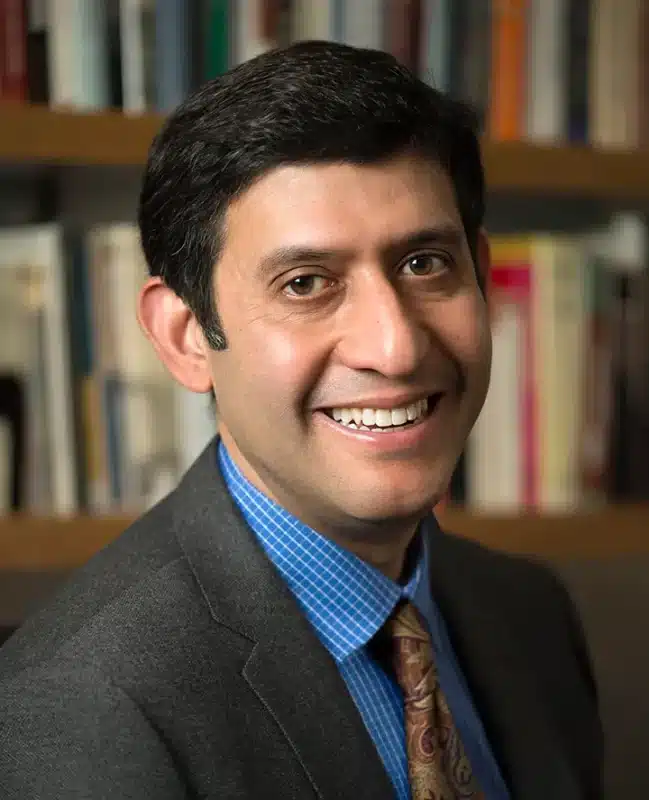
We are thrilled to share that our keynote speaker in Madison will be Johann Neem, professor of history at Western Washington University. What follows are a few questions we asked Johann about the conference and his keynote.
The conference theme is “Intellectual Historians’ Toolkits: Methods, Practices, Theories.” Looking back at your own development as a historian, what’s one methodological commitment—a way of reading, a conceptual framework, an archival instinct—that has proven most durable in your own work, and where did it come from?
Johann: One of my mentors is the sociologist James Davison Hunter, who I first met when I was a postdoctoral student at his center at the University of Virginia. Hunter would remind us that we should be studying climate change, not the weather. Lots of people study the weather, but he taught me to look for deeper sources of historical change that produced what appeared on the surface to be rival weather systems.
What types of questions do you think intellectual historians are especially equipped to answer today? Where do you hope to see their energies applied in the future?
Johann: I think intellectual historians today are versed in asking big questions about the nature of the social and the political because we read and engage with social theory. That means that we think about the polity in different ways than scholars who study the same subjects using other lenses. I really do think our ability to step back and engage in framing is particularly important given the crises facing our republic.
Give us a tease of your keynote address. What’s the central argument or provocation you’re planning to bring to the keynote? Or, if not at that stage, what is a theme or issue you’re thinking about right now in relation to your address?
Johann: Well, it’s far enough away that I can’t say that I have it all down. I want to think about the value of doing history in dangerous times like our own. I want to think about why we must keep doing what we do. I may also grapple with what it means for American historians to think of endings in a story that was supposed to have no end.
The year is 2026 and the U.S. is celebrating its semiquincentennial. Does that have any special significance for you as a historian? Does it invite any questions about intellectual history in the context of our conference that you hope that we will address in Madison?
Johann: Yes and yes.
As a naturalized citizen, I love this country. At a personal level, it is just heartbreaking to go into the 250th worried about how divided we are and angry we are at each other. I want to spend the 4th of July celebrating, but right now I just feel sadness and loss.
As an early American historian who teaches courses on the American Revolution, I have always sought to help students understand the principles and ideas of the American founding era. Those ideas matter more than ever today as we are facing a lawless White House. I find even teaching about the core ideas of the Revolution—consent of the governed, the rule of law, the dangers of arbitrary power—in the Trump era to be charged. Eighteenth-century ideas are no longer dusty artifacts but alive and resonant. On the one hand, as a professor who tries very hard to keep my politics out of the classroom, this makes me uncomfortable, but I believe Americans today need to understand the obligations that come with their republican heritage.
I also think we need to use our tools to understand the complex moment we inhabit. There has been a lot of good work on the ideas animating the MAGA right: post-liberalism, techno-utopianism, white and Christian nationalism, monarchism. The best of this work takes seriously and grapples honestly with the critiques conservatives have offered about progressivism and liberalism. I think historians need to grapple equally with changes in progressivism and liberalism over the same decades. As intellectual historians we can take a step back and help Americans understand the dynamic interplay of ideas that helped produce our current crises. That’s why at the conference I hope we’ll think about climate change and not just about rival weather systems!
Have you ever visited Madison before? If so, what sticks out from the city or the campus of UW-Madison? If not, is there anything you associate about this place or have been curious about that you’re looking forward to discovering in November?
My first visit to Madison was as a college student. A college friend of mine from Minneapolis and I drove down to Madison during a snowy time in his old pickup to visit another friend. As a Californian from the SF Bay Area, it was frightening to see so much snow, but fortunately we arrived safely. My hope is that the skies are clear and blue for our conference.
We hope so, too.
Join us in Madison. Check out the Call for Proposals here.
0