
The Book
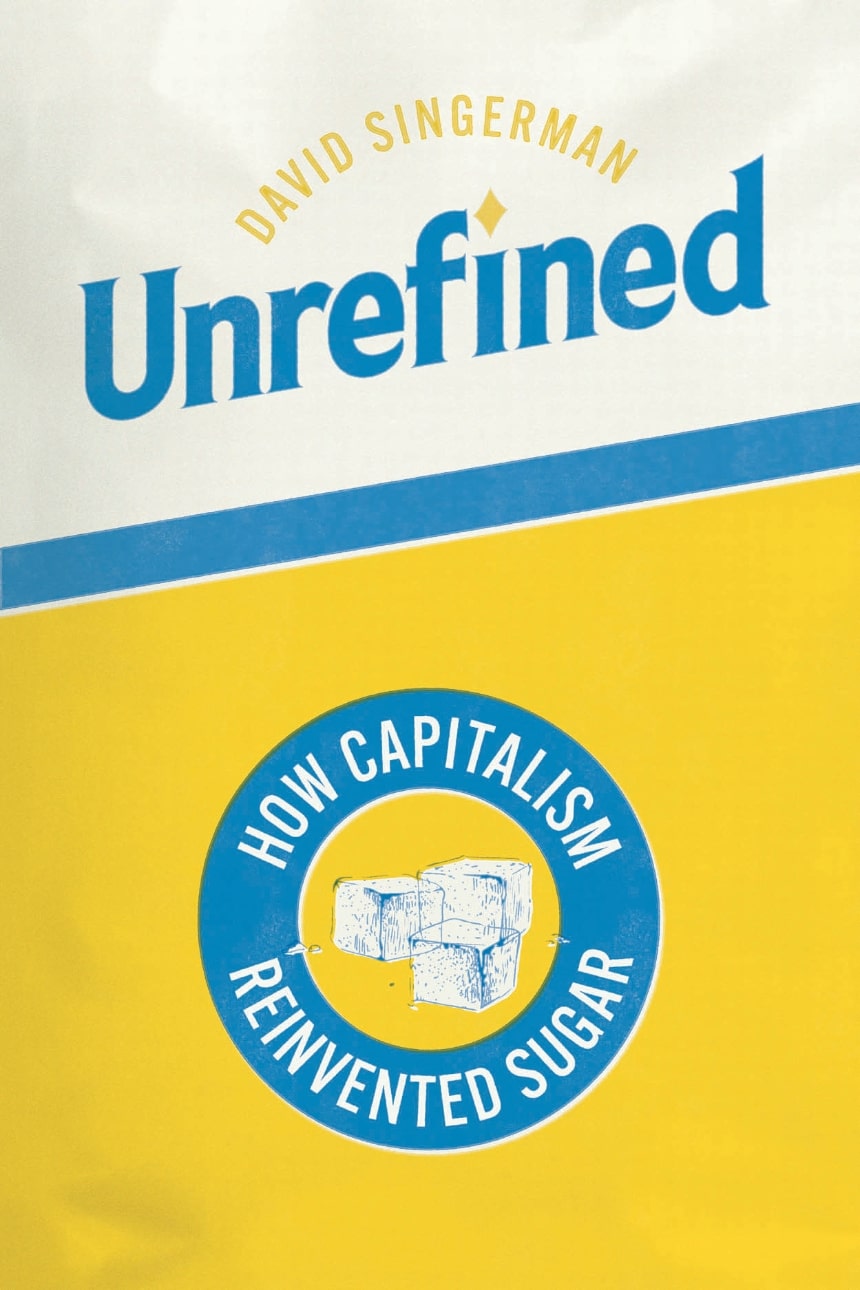
Unrefined: How Capitalism Reinvented Sugar
The Author(s)
David Singerman
The history of sugar continues to exercise great curiosity among scholars. In large part, this stems from the centrality of different forms of sweetness in the history of human taste and diet over the centuries. Sugar lies firmly at the centre of some of mankind’s most challenging topics – most notably the history of slavery and slave trading. It is hard to consider the story of the global demand for sugar cane without understanding the transportation of millions of enslaved Africans into the Americas. And, not surprisingly, the broader story of mankind’s global addiction to sweet drinks and foodstuffs has attracted the attention of the gamut of scholarly interests, from historians to medical scientists.
Singerman’s excellent and highly original study is a bold and persuasive exploration of the way the more recent story of sugar is grounded in a complex brew of scientific and commercial change, powerful economic interests and a great deal of U.S. political skullduggery. In the process he throws new light on several under-explored issues, most notably the scientific and commercial confusions in the grading of sucrose.
The historical origins of cane sugar are well-known, so too the rise of sugar beet and the consequent shift of geographic production and the rise of highly technical cultivation and production. All of this was fuelled by advances in modern science and technology, and all sustained by modern capitalist interests. Those interests drove the demand for consistency in production and quality of sugar, with a consequent drive for scientific analysis which served the interests of financial backers, consumers – and the enormously powerful vested interests at work in the major trading centres of the West (in this case, primarily in the USA.) This drive for standardisation was also common to the world’s other major commodities and was on display in all the world’s major trading centres –in the exchanges and trading houses in Chicago and New York, in London and Liverpool.
One of Singerman’s major achievements is to expose how this drive for standardisation in assessing sugar – was just one aspect of science being bent to the whim of modern capitalist interests. Thereafter, it became the plaything of political interests which were keen to exercise control over commodities. And those commodities had become essential to the way the western world – and its financial and commercial underpinnings – functioned. On the eve of World War I, highly refined sugar (both cane and beet) was essential to western — indeed global — diet. The production, storage and transportation of sugar thereafter was a major strategic question which faced all the combatant (as it was again, in World War II).
In a well-trodden field, Singerman has written a highly original study which explains how sugar – despite its great varieties — had established itself as an agreed-upon single commodity at the heart of global trade and commerce.
About the Reviewer
James Walvin is Emeritus Professor of History at the University of York. He has published extensively in the field of slavery and modern social history. His recent books are A World Transformed. Slavery in the Americas and the Origins of Global Power (2022) and Amazing Grace. A Cultural History of the Beloved Hymn (2023), both with the University of California Press.
0