
The Society of U.S. Intellectual Historians is excited to announce that the co-winners of the 2026 book prize in United States Intellectual History are Andrew Hartman for Karl Marx in America (University of Chicago Press, 2025) and Jarvis C. McInnis, Afterlives of the Plantation: Plotting Agrarian Futures in the Global Black South (Columbia, 2025). Honorable mention is awarded to Andrew Preston, Total Defense: The New Deal and the Invention of National Security (Harvard, 2025).
Thanks to the Book Prize Committee (Robert Greene, Ronnie Grinberg, and Keidrick J. Roy) for the detailed and deliberate work done to reach this decision.
The author or editor of four books, Andrew Hartman is Distinguished Professor of History at Illinois State University where he teaches courses in U.S. history, as well as courses in the philosophy of history, historiography, and pedagogy. Jarvis McInnis is an Associate Professor of English at Duke University, and an interdisciplinary scholar of African American & African Diaspora literature and culture, with teaching and research interests in the global south (primarily the US South and the Caribbean), sound studies, performance studies, and visual culture. Andrew Preston is the recently named W.L. Lyons Brown Jr. Jefferson Scholars Foundation Distinguished Professor of Diplomacy and Statecraft at the University of Virginia.
The committee writes:
Andrew Hartman’s Karl Marx in America was chosen by the committee because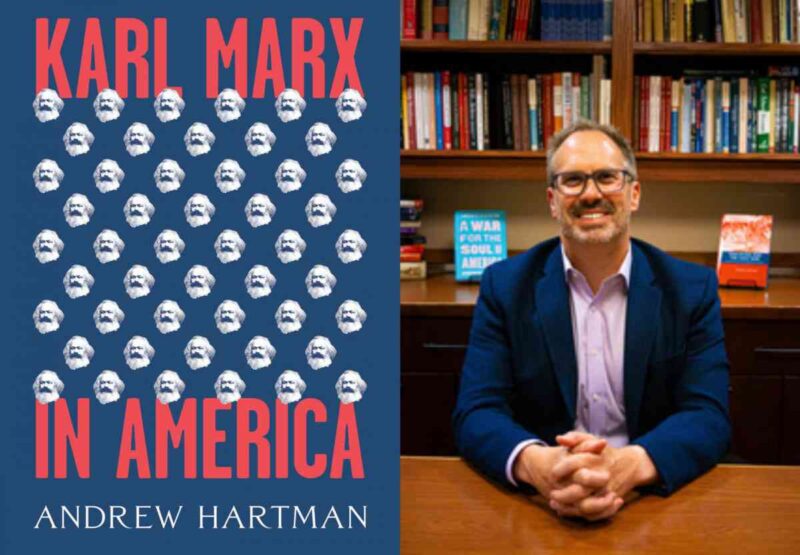 of its crisp and accessible prose and compelling argument about Marx’s influence on American life. Hartman shows that rather than the United States being a “quintessential anti-Marxist nation,” Marx’s ideas were robustly debated across the country in various, and often surprising, ways for more than one hundred and fifty years. While Marxism did not prevail in the U.S.,Hartman persuasively shows how arguing and engaging with Marx’s ideas has left an indelible print on American social, cultural, and political thought. Hartman brings this fascinating history to life in his eloquent book.
Meanwhile, Jarvis C. McInnis’s Afterlives of the Plantation provides an innovative and valuable reappraisal of key facets of African American intellectual history. In particular, McInnis’s rendering of a “global Black South” stages a range of important contributions and interventions. McInnis shows how the U.S. South and Caribbean became critical loci for the formation of a distinct and robust Black intellectual and artistic tradition, convincingly arguing that Black 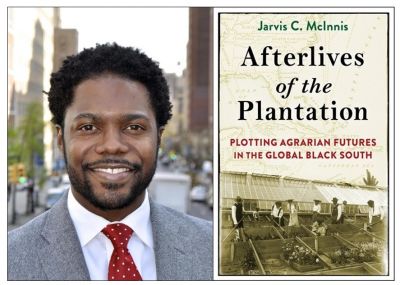 modernity did not emerge solely from the African American migration to the urban North but from within the crucible of the hemispheric plantation South. In addition, McInnis reappraises Booker T. Washington as a more complicated and nuanced figure than common renderings of him as the conservative foil to W. E. B. Du Bois in African American history. Finally, Afterlives of the Plantation places Washington, and other key Black figures, into a generative transnational intellectual context. The book, too, is beautifully written and argued.
Finally, Andrew Preston’s Total Defense speaks to the present moment and concerns over the intersection of national defense and the national security state. Preston’s work places that 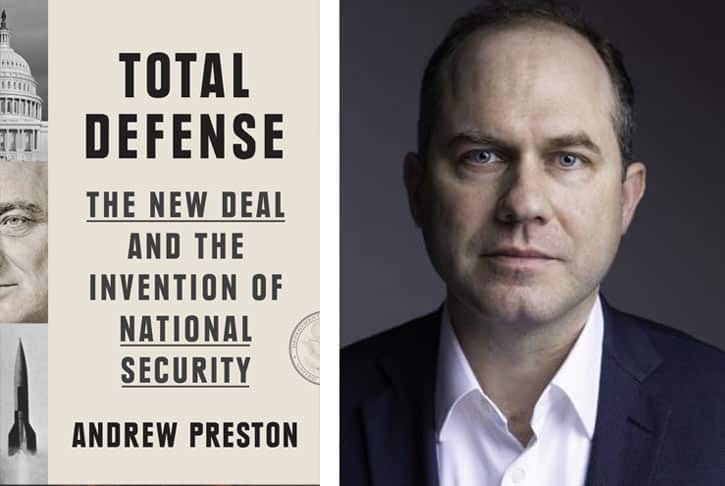 history squarely within the context of President Franklin Roosevelt’s New Deal. In particular, Preston traces the evolution of Roosevelt’s priorities “from the welfare state to the warfare state” through an adroit analysis of a dazzling array of sources. In the end, Total Defense shows how American foreign policy and the debate over the meaning of “national security” permeated much of American intellectual, political, and cultural history.
All three works pushed committee members to reconsider their historiographical assumptions governing approaches to the diverse field of United States intellectual history. There were many laudable submissions to this year’s prize, and deciding on the honorees was difficult. Congratulations to all the winners and nominees!
0