
The Book
Neoliberalism and Race
The Author(s)
Lars Cornelissen
Early neoliberals did not mince words when speaking about race. “Races do differ in intelligence and will power,” wrote Ludwig von Mises in 1922, “and… this being so, they are very unequal in their ability to form society.” Racial differences, for Mises, could explain the “flowering and decline of civilizations,” and even more importantly, the ascendance of Western, market-based regimes.[1] As a foundational thinker of neoliberalism, Mises’ racial determinism was both taken up and rejected by those who followed him. Some of his acolytes, like F. A. Hayek, eschewed his openly racist assumptions, while others, like Murray Rothbard, directly built on them to describe biology as the hard “rock” upon which “egalitarian fantasies” would fail.[2] What role does race play in neoliberal thought? Is race constitutive of neoliberalism?
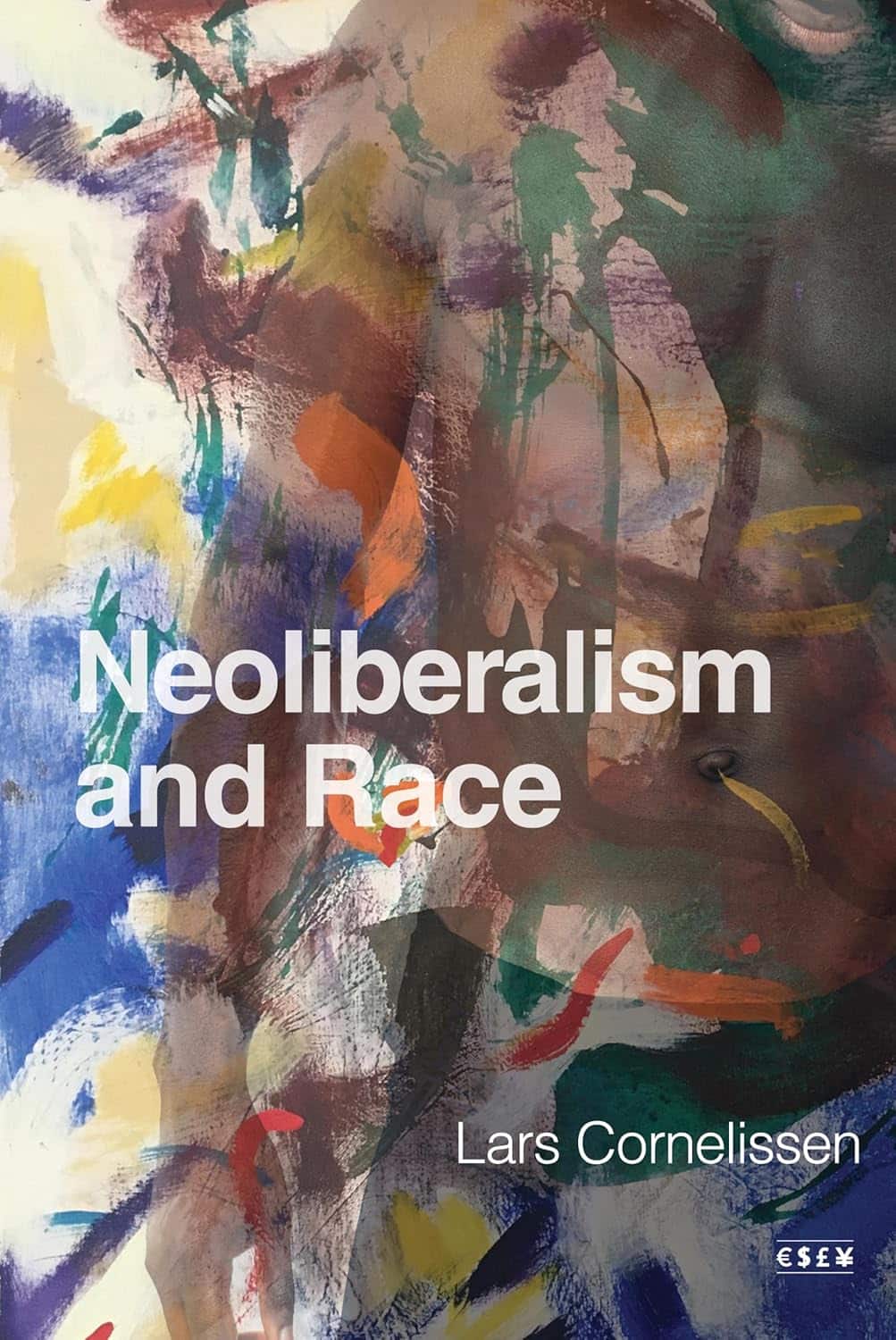
In Neoliberalism and Race, historian Lars Cornelissen makes an important contribution to U.S. intellectual history by bringing together critical race studies and the literature on neoliberalism. He forcefully argues that the “category of race is one of the organizing principles of neoliberal thought,” and that neoliberal racial constructs have served to “naturalize inequalities of wealth, power, and standing.”[3] As race is a “deeply malleable category”—variously configured through biology or culture, genes or habits—he implores historians to pay attention not only to overtly racist discourse, but also to the racial logics that undergird neoliberalism.[4] In five succinct chapters, Cornelissen examines thinkers from Mises to Charles Murray who crafted explicit theories of race and the market, as well as theorists like Hayek or Peter Bauer who expunged scientific racism from their writing, yet still engaged in what Cornelissen calls “neoliberal racial thinking.”[5]
Neoliberalism and Race is strongest where Cornelissen meticulously maps out how various neoliberal intellectuals explicitly engaged in the enterprise of colonialism. Through skillful archival work, Cornelissen traces how figures like Peter Bauer, Walter Elkan, Frederic Benham, or Arthur Shenfield worked as British colonial officials or advisers, personally and professionally profiting from the work of empire. These figures “made Eurocentric arguments about Western genius or the deep-rooted defects barring non-Western culture from genuine progress.”[6] Cornelissen demonstrates how these arguments informed development efforts in the British colonies, and then later provided the basis for colonialist historians to construct a systematic defense of empire, and particularly, to rationalize white minority rule in apartheid South Africa.
Throughout the book, Cornelissen tracks how racial thinking was smuggled into neoliberal economic thought through assumptions about “civilization.” Neoliberals, particularly Mises and Hayek, argued that Western civilization was the baseline for the market to function. Neoliberals were, of course, not the first to make these arguments. Liberal thinkers from Adam Smith to John Locke assumed the importance of Western cultural values for the proper functioning of individual rights and property rights. Smith, moreover, asserted a stadial theory of human development, whereby humans graduated from hunting to pastoralism to agriculture to commerce. Cornelissen highlights how Mises and Hayek also theorized “civilizational progress as a passage from a primitive stage… to a civilized stage.”[7] This, however, raises the question: if the conflation of civilization and race are not just at the heart of neoliberalism, but also liberalism, what makes neoliberal racial thinking distinct?
More generally, “neoliberalism” is a murky category within Neoliberalism and Race. Part of this stems from the very “substantive hollowness” and conceptual flabbiness of the term itself.[8] Historians have gone to some lengths to disambiguate “neoliberalism,” showing how it has been variously used to describe an economic order in the late twentieth century, a set of business-friendly policies, a cultural regime, or an intellectual tradition.[9] Cornelissen explicitly examines neoliberalism as the latter, as a “tradition of thought assembled and kept alive by a well-organized and transnational network of intellectuals.”[10] Yet, surprisingly, at no point in his introduction does Cornelissen substantively define what ideas constitute this “tradition of thought,” making the assumption that readers intuitively understand what “neoliberalism” is and does.
Indeed, Cornelissen’s analysis would benefit from a deeper engagement with the robust literature of the different schools of neoliberal thought—whether Austrian, Chicago, Geneva, Virginia, Objectivist, or new fusionist—which he instead lumps together under the banner of “neoliberalism.”[11] From chapter to chapter, Cornelissen moves between a variety of free-market thinkers who seem mainly connected by their links to the Mont Pèlerin Society, rather than the intellectual traditions that they helped to construct. The reader is left wanting a greater comparison of how the work of race differs between the different schools of neoliberal thought.
Even so, by examining racial essentialists alongside color-blind theorists, Neoliberalism and Race raises critical questions for historians about the mobilization of race within contemporary politics. We live in a time when Reagan-era color-blindness has been superseded by President Trump and the MAGA movement’s disturbing use of biological arguments for racial difference and outright racial slurs. Historians are called upon to identify how and why a biologically rooted-language of race has reemerged in this political moment. Moreover, why has this racialized language reappeared at the very moment when the neoliberal order is said to be over? Cornelissen’s Neoliberalism and Race offers a provocation for historians to get to the root of these questions.
[1] Quoted in Lars Cornelissen, Neoliberalism and Race (Stanford University Press, 2025), 31.
[2] Murray Rothbard, Egalitarianism as a Revolt Against Nature and Other Essays (Ludwig Von Mises Institute, 2000).
[3] Cornelissen, Neoliberalism and Race, 2.
[4] Cornelissen, Neoliberalism and Race, 5.
[5] Cornelissen, Neoliberalism and Race, 16.
[6] Cornelissen, Neoliberalism and Race, 79.
[7] Cornelissen, Neoliberalism and Race, 38.
[8] Daniel T. Rodgers, “The Uses and Abuses of ‘Neoliberalism,’” Dissent 65, no. 1 (2018): 80.
[9] Rodgers, “The Uses and Abuses of ‘Neoliberalism’”; Kim Phillips-Fein, “The History of Neoliberalism,” in Shaped by the State: Toward a New Political History of the Twentieth Century, ed. Brent Cebul et al. (The University of Chicago Press, 2019).
[10] Cornelissen, Neoliberalism and Race, 12.
[11] Recent additions to this literature include Quinn Slobodian, Hayek’s Bastards: Race, Gold, IQ, and the Capitalism of the Far Right (Princeton University Press, 2025); Melinda Cooper, Counterrevolution: Extravagance and Austerity in Public Finance (Zone Books, 2024).
About the Reviewer
Whitney McIntosh is an Assistant Professor of Modern U.S. History at Worcester Polytechnic Institute. Her current book project, American Libertarianism: A Philosophy, a Movement, a Sensibility, is a history of libertarianism from the 1960s counterculture to the dawn of the digital age.
0